Cloudflare’s Worst Outage in 6 Years Just Killed Half the Internet
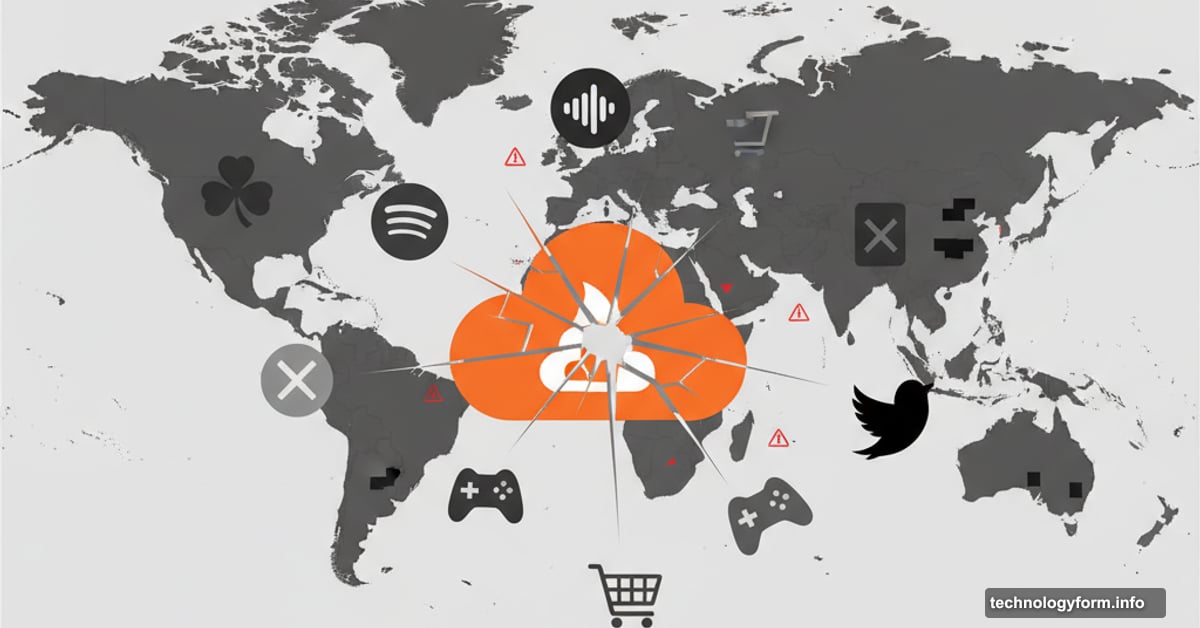
For three brutal hours Tuesday morning, a massive chunk of the internet simply stopped working. OpenAI, Spotify, X, Grindr, and hundreds of other services went dark simultaneously.
The culprit? Cloudflare, the invisible infrastructure company that powers roughly 20% of all websites. And according to CEO Matthew Prince, this was their worst meltdown since 2019.
Here’s what went wrong and why it matters more than you think.
A Database Change Brought Everything Down
Cloudflare initially suspected a massive cyberattack. That would’ve made sense. Distributed denial-of-service attacks are common, and Cloudflare specifically protects sites against them.
But the truth was more embarrassing. A simple database update created an oversized file. The software couldn’t process it. So everything crashed.
Think about that. One internal configuration change took down a fifth of the internet. No hackers required.
The failure started around 3:30 a.m. Pacific Time. By 6:30 a.m., engineers had rolled back to an earlier version of the problematic file. Most services recovered within three hours. However, the damage was done.
Over 2 Million Outage Reports Flooded In
Downdetector, the site where people report service problems, was itself knocked offline initially. Once it came back up, the numbers were staggering.
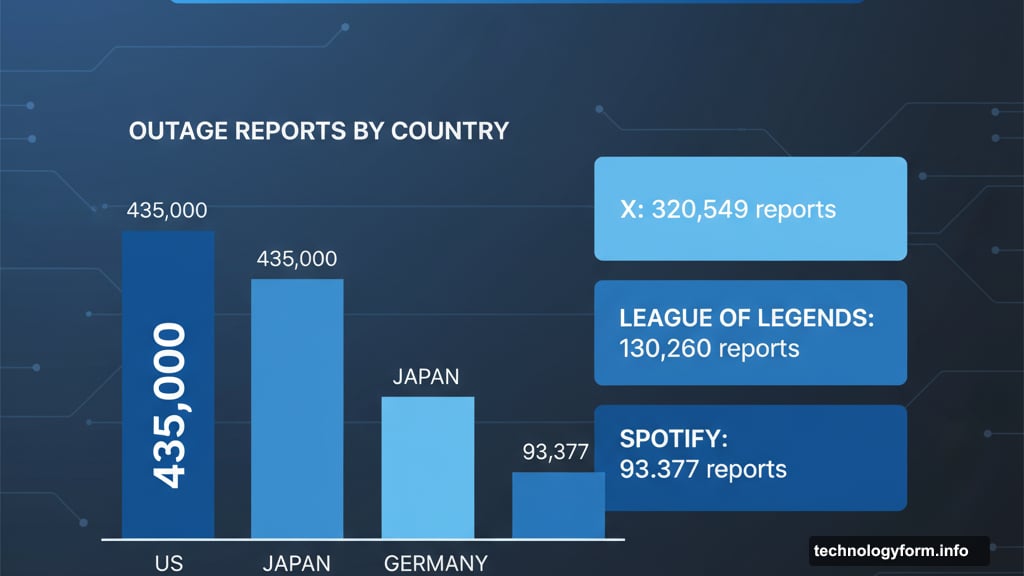
Users filed over 2.1 million reports during the outage window. The US led with 435,000 reports, followed by the UK, Japan, and Germany.
Individual services took massive hits too. X received 320,549 reports. League of Legends got 130,260. OpenAI logged 81,077. Spotify users submitted 93,377 complaints.
Plus, smaller services like Letterboxd, Canva, and Etsy went dark. Each outage rippled through businesses and users who depend on these platforms daily.
The Real Cost: $250-300 Million in Losses
Forrester Research analyst Brent Ellis estimates the three-hour outage cost between $250 million and $300 million. That includes direct downtime losses and indirect effects on hosted services.

Consider Shopify and Etsy. Both platforms host stores for hundreds of thousands of small businesses. When Cloudflare failed, those merchants couldn’t process orders. Sales evaporated. Customer trust took a hit.
Moreover, subscription services lost revenue during the blackout. Streaming platforms couldn’t serve ads. Gaming companies couldn’t sell in-game purchases. The financial impact extends far beyond Cloudflare itself.
AI Infrastructure Exposed as Fragile
The OpenAI outage particularly concerned experts. Companies have poured trillions into AI development. Yet the entire ecosystem depends on third-party infrastructure that can fail without warning.
Sarah Kreps from Cornell’s Tech Policy Institute put it bluntly. ChatGPT didn’t buckle from too many queries or competitive pressure. It failed because Cloudflare had a problem.
“This multibillion, even trillion-dollar investment in AI is only as reliable as its least scrutinized third-party infrastructure,” said Kreps.
That’s a sobering reality check. All the advanced language models, all the computational power, all the training data means nothing if the underlying cloud services go down.
Concentration Risk Keeps Getting Worse
This marks the second major cloud infrastructure failure in a month. Amazon Web Services went down in October, taking Reddit, Snapchat, Roblox, and Fortnite with it.
The pattern is clear. A handful of companies control critical internet infrastructure. When they fail, massive portions of the web become unusable.
Besides Cloudflare and AWS, only a few other providers handle similar scale. Google Cloud, Microsoft Azure, and Fastly round out the list. Each has experienced significant outages in recent years.
Yet businesses keep concentrating their infrastructure with these giants. Why? Because the alternatives are worse. Smaller providers lack the global reach and feature sets. Building your own infrastructure costs even more.
So we’re stuck in a paradox. Centralization creates vulnerability. But decentralization isn’t practical for most companies.
Cloudflare’s Response: Too Little, Too Late?
CEO Matthew Prince called the outage “unacceptable” and “deeply painful.” He emphasized that no cyberattack was involved. The company promised a full post-incident investigation.
But apologies don’t prevent future failures. Cloudflare’s systems should catch oversized files before they crash production environments. That’s basic quality assurance.
Moreover, the three-hour recovery time raised questions. If engineers could fix the problem by rolling back a file, why did it take so long? Other companies restore from backups in minutes, not hours.
Cloudflare’s status as critical infrastructure demands better. Airlines face massive fines for extended delays. Banks must maintain backup systems. Perhaps cloud providers need similar accountability.
What This Means for Your Business
If your company uses Cloudflare, AWS, or similar services, you’re vulnerable. No amount of planning eliminates this risk entirely.
However, you can reduce exposure. Implement multi-cloud strategies where practical. Keep critical functions on separate providers. Monitor dependencies obsessively.
Plus, maintain offline backups of essential data. When cloud services fail, you need local copies. Too many businesses learned this lesson the hard way Tuesday morning.
Test your disaster recovery plans regularly. Don’t wait for an outage to discover your backup strategy doesn’t work.
The Internet Isn’t as Stable as We Pretend
Tuesday’s outage shattered the illusion of internet reliability. We act like online services are utilities, always available like water or electricity.
But they’re not. Cloud infrastructure fails regularly. Sometimes for minutes, sometimes for hours. Each failure costs millions and disrupts countless users.
Yet we keep building everything on top of these fragile foundations. Businesses migrate entirely to the cloud. Critical services eliminate offline functionality. We assume the internet will always work.
That assumption is dangerous. The concentration of infrastructure in a few companies creates systemic risk. When one fails, everyone suffers.
Cloudflare’s CEO is right to call this unacceptable. But words won’t fix structural problems. The industry needs better redundancy, stricter quality standards, and real accountability.
Until then, expect more outages. Plan accordingly. Your business depends on it.